
-
Today's Hours: 7:30 AM - 5:30 PM
-
Monday7:30 AM - 5:30 PM
-
Tuesday7:30 AM - 5:30 PM
-
Wednesday7:30 AM - 5:30 PM
-
Thursday7:30 AM - 5:30 PM
-
Friday7:30 AM - 5:30 PM


Pre-Kindergarten Program in Menlo Park, CA
A Nurturing Start for Your Child’s Next Big Step
As your child gets closer to kindergarten, it can feel both exciting and a little overwhelming to choose the right pre-kindergarten program. You want a place where your child is known, encouraged, and gently challenged, and where each day builds real skills for school and life. At Safari Kid Menlo Park, we offer a pre-kindergarten experience that brings together research-driven curriculum, caring educators, and warm, nature-inspired classrooms right here in Menlo Park.
We draw from respected approaches in early childhood education and combine them with our own proprietary curriculum that supports the whole child. Our team focuses on cognitive, social, language and literacy, physical, emotional, and health and care development, so your child can grow in every direction, not just academics. Families choose us because they feel our commitment to thoughtful teaching, open communication, and a community where children can thrive.
Give your child a head start on structured learning with our Pre-Kindergarten program in Menlo Park, CA. Get started by calling (650) 487-1156 or contact us online for more information.
A Pre-K Year That Builds Confidence & Kindergarten Readiness
The pre-kindergarten year is a big leap for many children. They are expanding their vocabulary, asking more complex questions, forming deeper friendships, and starting to recognize letters, numbers, and patterns all at once. This is also the time when they begin to understand routines, follow multi-step directions, and express their feelings with more detail, which are all important foundations for kindergarten.
Promoting Exploration and Self-Guided Learning Through a Montessori and Reggio Emilia-Based Curriculum
Here, we design the pre-kindergarten year to support that rapid growth in a calm and joyful way. Our proprietary curriculum draws inspiration from Montessori, Reggio Emilia, and other respected methodologies, then adapts them into a structured yet flexible framework. Children explore materials with their hands, listen to rich stories, build with peers, and practice early math through games and real-life situations. We aim to develop skills such as listening, turn-taking, problem-solving, and persistence, which help children feel ready when they join a kindergarten classroom in this area.
We believe that children learn best when they are engaged and curious, not pressured. Instead of drilling, we weave early literacy and numeracy into play based experiences, small group projects, and thoughtful conversations. This approach helps children build a strong foundation for learning, while also nurturing their love of discovery and their confidence in trying new things.
Inside Our Menlo Park Pre-K Classroom
Learning Spaces Designed for Young Children
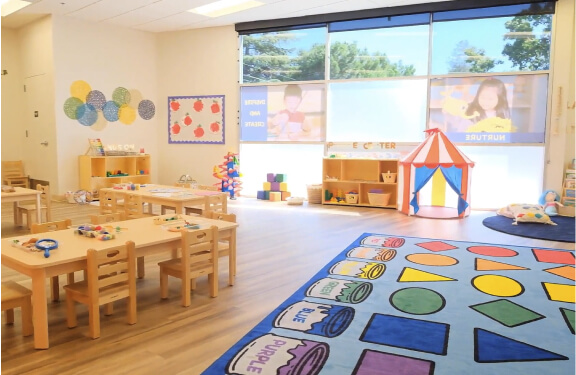
When you step into our pre-k classroom in Menlo Park, you will notice a calm, inviting space filled with natural light, child-sized furniture, and carefully chosen materials. Shelves are organized so children can find what they need and put it back with pride. You might see art supplies ready for open-ended projects, story corners with cozy seating, blocks and construction sets, and science areas with objects from nature that spark questions.
The classroom is arranged in distinct learning areas so children can move purposefully from one type of activity to another. There are quiet corners for reading, tables for small group work, and open spaces for building and dramatic play. Materials are placed at child level to encourage independence and a sense of ownership. We strive to create an environment that feels both stimulating and peaceful.
A Day That Balances Structure & Choice
A typical day follows a rhythm that helps children feel secure while still leaving room for exploration. Mornings often begin with a warm welcome and a group meeting where children share news, sing songs, and review the day’s plans. After that, they move into a mix of small group activities and independent choices. During this time, teachers invite children to work on early literacy or math games, fine motor tasks, and collaborative projects that match their interests and developmental stage.
Outdoor Play for Physical Activity
Outdoor play is also an important part of our day. The center’s design includes access to outdoor spaces where children can run, climb, dig, and explore. We make use of the generally mild local climate so children have frequent opportunities to play outside, practice gross motor skills, and connect with nature. This balance of indoor and outdoor time supports both physical health and emotional regulation.
Preparing Small Children for Routines
Later in the day, children gather again for story time, reflection, or group projects, then transition into quieter activities that help them wind down. Throughout the day, routines such as handwashing, snack times, and clean up are woven in to build independence and responsibility. Our goal is for every child to feel that the classroom is a safe, predictable place where they can try new things and be themselves.
How Our Educators Support Every Child’s Growth
Relationships at the Heart of Learning
The relationships children form with their teachers shape how they feel about school. Our educators are highly trained in early childhood development and bring genuine warmth, patience, and curiosity to their work each day. They learn each child’s name, preferences, strengths, and sensitivities, and they work to build trust so children feel comfortable taking risks and asking for help.
We know that no two children learn in exactly the same way. Our teachers observe how each child approaches tasks, plays with peers, and responds to new ideas. They use these observations, along with ongoing assessments, to understand progress in areas like language, problem solving, fine and gross motor skills, and social interactions. These assessments are not tests in the traditional sense. Instead, they are tools that help us notice what a child is ready for next and how we can adjust activities to keep them engaged.
Responsive Teaching & Individual Support
When a child needs more practice or a different approach, our educators look for ways to adapt. This might mean offering additional hands-on materials for a math concept, pairing a child with a peer for a cooperative activity, or building more movement into learning for an active child. When a child is ready for more challenge, we offer deeper questions, more complex tasks, or leadership roles in group work.
Through this responsive approach, we strive to support steady, confident growth at each child’s own pace. Children experience success in many forms, from solving a puzzle to helping a friend, and teachers celebrate these moments so children feel proud of their progress.
Family Partnerships & Ongoing Communication
Staying Connected to Your Child’s Day
As a parent, you want to know what your child is experiencing each day and how they are progressing. We view families as partners and work to keep communication open, consistent, and meaningful. Our team uses tools such as Procare and social media updates to share glimpses of classroom life, reminders, and important announcements. These platforms help you feel connected to your child’s day, even when you are busy with work and other responsibilities.
We also provide regular opportunities for more in depth conversation. This can include scheduled progress meetings, written developmental updates, and goal setting discussions. During these times, we share our observations and assessments, listen to your insights about your child, and plan together for next steps. We invite you to share your questions, concerns, and hopes, and we take that feedback seriously as we shape your child’s experience.
Building a Strong School Community
Beyond formal updates, we host family events and classroom gatherings that bring our community together. These might include seasonal celebrations, learning showcases, or opportunities for families to join in activities with children. These events help children feel proud of their work and give you a chance to see the environment and relationships that support your child every day.
Our aim is to create a strong home school connection where you always feel informed, welcomed, and heard. When families and educators work together, children benefit from a consistent message of support, encouragement, and high expectations that match their developmental stage.
A Holistic Curriculum That Sparks Curiosity
Whole Child Development in Every Activity
Our pre-kindergarten curriculum is designed to nurture the whole child. We focus on cognitive growth, language and literacy, social and emotional development, physical skills, and health and care habits. In practice, this means children spend their days engaged in rich, varied activities that touch many domains at once, instead of isolated drills.
In language and literacy, children listen to stories, retell events in their own words, explore letter sounds, and begin to recognize simple words in print. They draw, dictate, and experiment with early writing, which builds both fine motor control and narrative skills. In early math, they count, compare quantities, explore shapes, sort objects, and solve age appropriate problems through games and hands on materials.
Enrichment Through Arts, Music & Culture
Social and emotional learning is woven through everything we do. Children practice taking turns, sharing materials, working in small groups, and expressing their feelings with words. Teachers model and coach conflict resolution, so children learn how to navigate disagreements and repair friendships. These experiences help children build empathy, self regulation, and resilience, which are as important for future success as reading and numbers.
We also value arts, music, and cultural experiences. Children might create with paint and clay, move to different kinds of music, or learn about traditions from around the world through stories and classroom activities. These experiences broaden their perspective, support creativity, and help them become flexible thinkers who can adapt to new situations. Throughout the curriculum, we connect learning to real life skills, such as asking questions, trying again after a mistake, and working toward a goal.
How to Get Started With Our Pre-K Program
Schedule a Tour
When you are ready to explore options for pre-k in Menlo Park, we invite you to visit our center and see our classrooms in action. Families who live or work nearby can schedule tours at times that fit their routines, so you can observe the environment, meet our educators, and ask questions about how we support children and families. Visiting in person often helps you picture your own child in the space and decide whether it feels like the right fit.
Overview of Classrooms, Schedule, and Activities
During a tour, our team will walk you through the pre-k classroom, describe the daily schedule, and share examples of current projects. You will have a chance to talk about your child’s interests, temperament, and any specific needs, and we will explain how we tailor our approach to different learners. If you decide to move forward, we will guide you through the enrollment steps, which typically include an application, placement confirmation, and an orientation process to help your child transition comfortably.
Answering Your Questions Along the Way
Our goal is to make the process clear and supportive, not rushed. You can take the time you need to consider options, and we are here to answer questions along the way. By choosing Safari Kid Menlo Park, you are partnering with a team that brings global early childhood experience to a local, nurturing setting, focused on your child’s whole development and their next steps into school.
To learn more about our Pre-K program in Menlo Park or to schedule a visit, please call (650) 487-1156 or reach out online now.
Frequently Asked Questions
What Will My Child Learn In Your Pre-K Program?
Your child will build a wide range of skills that support kindergarten readiness and long-term learning. In language and literacy, children listen to stories, discuss characters and events, explore letter sounds, and begin to recognize words in print. In early math, they practice counting, comparing amounts, working with shapes, and solving simple problems through games and hands-on activities.
Beyond academics, children develop social and emotional skills such as sharing, taking turns, cooperating in groups, and expressing their feelings appropriately. They also grow in independence as they manage belongings, follow routines, and make choices within the classroom. Our curriculum is designed to integrate these domains, so a single activity might support language, problem-solving, and social skills at the same time.
How Do You Help Children Get Ready For Kindergarten Emotionally & Socially?
We help children get ready for kindergarten by giving them daily practice with the social and emotional skills they will use in any school setting. Morning meetings, small group work, and shared projects all give children chances to take turns speaking, listen to others, and collaborate. Teachers model respectful communication and guide children in resolving conflicts, which builds confidence in handling peer interactions.
We also use predictable routines that mirror elements of elementary classrooms, such as lining up, transitioning between activities, and participating in group lessons. When children know what to expect, they often feel calmer and more secure. For those who are shy or slow to warm up, our educators work gently and patiently to include them in group activities and celebrate small steps toward participation. Over time, children typically become more comfortable separating from caregivers, speaking in front of the group, and trying new tasks.
Who Will Be Teaching My Child, & How Are Your Educators Trained?
Your child will learn with educators who have training in early childhood development and a strong commitment to working with young children. Our team understands how children grow across cognitive, social, emotional, and physical domains, and they apply that knowledge when planning activities and responding to each child. We look for teachers who are not only knowledgeable but also kind, patient, and enthusiastic.
Our educators participate in ongoing professional development to stay current with research-based practices and refine their skills. They use observation and assessment tools to understand how children are progressing, then adjust their teaching strategies accordingly. This combination of training, continual learning, and genuine care helps us provide a consistent, supportive experience in the classroom.
How Will You Keep Me Informed About My Child’s Day & Progress?
We communicate with families regularly so you feel connected to your child’s experience. Daily or frequent updates may be shared through tools such as Procare and social media posts that highlight classroom activities, reminders, and important notes. These updates give you a window into your child’s day, even when your schedule is full.
In addition, we schedule more formal conversations to discuss your child’s development. This can include progress meetings, written updates, and time to talk through questions or goals you may have. Our educators are available for brief check-ins during drop off or pick up when appropriate, and you are always welcome to reach out with concerns. We aim to create a communication pattern that feels open, respectful, and responsive.
What Does A Typical Day Look Like For Pre-K Children Here?
A typical day balances structure with choice, active play with quiet time. Children usually begin with arrival routines and a group gathering where they greet friends, review the day, and engage in songs or discussions. Next, they move into a combination of guided small group activities and independent exploration, where they might work on early literacy games, building projects, art, or science investigations.
Outdoor play is an important part of the schedule, giving children time to move their bodies, practice coordination, and enjoy fresh air. Later in the day, there may be story time, music, or group projects that bring the class together again. The day closes with calming activities and routines that help children transition home. Throughout each part of the day, teachers focus on reinforcing skills such as cooperation, listening, and self-help.
How Do You Support Children Who Learn At Different Paces?
We expect children to grow at different rates, and we plan our teaching with that in mind. Our educators observe how each child engages with activities and how they respond to new challenges, then use that information to adjust support. For a child who needs more practice in a certain area, a teacher may offer additional small group time, extra repetition through games, or different materials that make a concept more accessible.
For children who are ready for more challenge, we might introduce more complex questions, multi step tasks, or leadership opportunities within the classroom. Our goal is to keep every child engaged and appropriately challenged, without creating pressure or comparison. By tailoring instruction and using ongoing assessments, we work to help each child make steady progress in a way that fits their unique learning style.
How Do I Enroll My Child Or Schedule A Visit?
You can begin by contacting us to schedule a tour of our pre-kindergarten program in Menlo Park. During your visit, you will be able to meet our educators, see the environment, and talk about your child’s strengths, interests, and any specific needs. This is also a good time to ask detailed questions about our curriculum, daily schedule, and family communication practices.
If you decide that our program is a good match, our team will walk you through the enrollment steps. This typically includes completing an application, confirming your child’s placement, and participating in an orientation process to help your child get comfortable. We know this is an important decision, and we are here to make the process as clear and supportive as possible.
To speak with our team about enrollment or to schedule a tour, call (650) 487-1156.
-
Cognitive
We encourage curiousity and a love for learning that inspires children to explore and discover.
-
Social

Children learn vital social skills through activities that emphasize cooperation and sharing.
-
Language & Literacy
Communication skills are developed through interactive and engaging activities.
-
Physical
We ensure children build strong, healthy bodies while fostering a love for movement.
-
Emotional
Our approach to emotional learning helps children recognize, express, and manage feelings.
-
Health & Care
Children learn to recognize and attend to their own needs, those of others, and the environment.
-
-
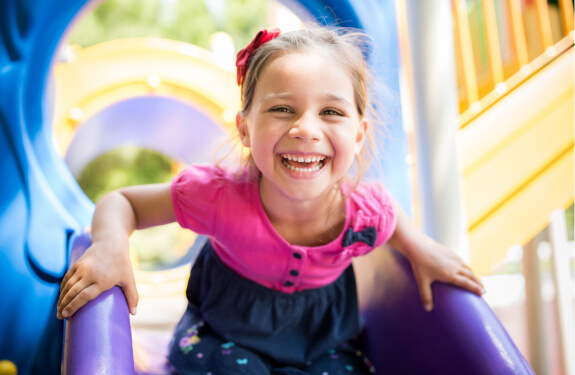 Whole Child DevelopmentWe nurture academic, social, emotional, and physical development through play.
 -
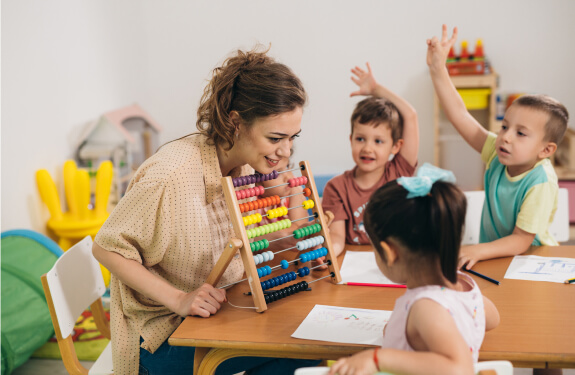 Cutting-Edge CurriculumResearch-backed education provides an invaluable headstart.
 -
 Welcoming EnvironmentThoughtfully designed facilities foster curiosity, safety, and rich learning.

-
2005The first Safari Kid Launches in Newark, CA
-
2007Safari Kid’s Eclectic Philosohpy is Introduced
-
2008The Proprietary Booklet System is Released
-
2009After-School Programs & Summer Camp Launch
-
2011The Safari Kid Toddler Program is Launched
-
2014The Safari Kid Infant Program is Launched
-
2015Environmental Guidelines Are Developed
-
2020The Kindergarten Program is Launched
Safari Kid Builds Relationships
Relationships are important to many aspects of life, and it's no different for young children. At Safari Kid, we value building strong relationships with our parents and students, as well as helping children develop relationships with peers and teachers. We foster meaningful relationships through:
- Encouraging parents to participate and collaborate with teachers
- Creating a nurturing environment with highly qualified, caring staff
- Teaching children how to interact with peers and develop positive relationships
Good friends, teachers, and schools are foundations for success in life. Early relationships can shape the way a child learns, grows, and develops into adulthood.


-
School environment is exceptional. Very colorful, bright, and playful environment, which attracts children’s attention.Katie LO
-
The dedicated staff at Safari Kids create a nurturing and stimulating environment, making it a perfect place for early childhood development.Sushma Venkatayogi
-
I would recommend safari kid to anyone looking for a great experience.Jill Turek
Safari Kid Offers a Safe & Welcoming Environment
At Safari Kid, the environment plays a crucial role in the learning process, influenced by the renowned Reggio Emilia philosophy, which considers the environment as the “third teacher.” They’re crafted to inspire exploration, discovery, and the joy of learning. Key elements of our environment include
- Sparkling clean, modern facilities maintained with meticulous care
- Thoughtfully organized and modern spaces that encourage your child’s natural curiosity
- Engaging indoor and outdoor spaces designed for safe, active play
Where your child spends their day matters! Our facilities are designed to provide a safe, healthy, and welcoming space for children to learn and grow.


Wondering where to start? Explore our early child education programs to learn more about specific age groups and curriculum options. You can also contact us online to find out more!