You know those moments when you wonder how your child’s day really went? Maybe you’re buckling them into the car seat after pickup and asking, “What did you do today?”—only to hear the classic answer: “Nothing.”
Meanwhile, you know that in the last few hours they probably painted a mini masterpiece, made a new friend, built a tower taller than themselves, and learned something new about the world. That’s where a strong home–school partnership becomes so powerful!
When parents and teachers stay connected, children benefit in incredible ways. When the adults in their lives communicate, support one another, and share the same goals, children feel secure, understood, and encouraged to grow. Here are a few ways families and preschools can work together to create that meaningful partnership.
Open Communication
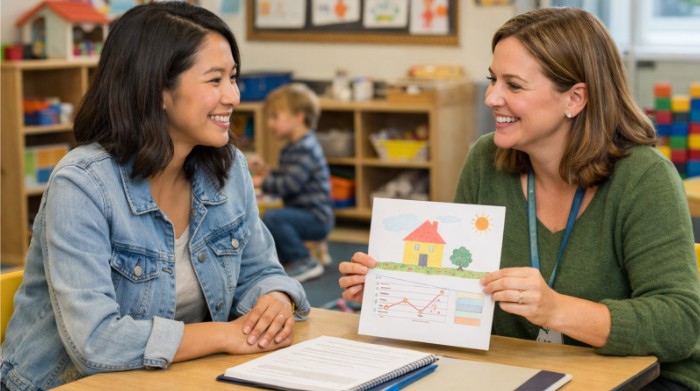
Regular communication between families and teachers helps everyone stay connected to a child’s experience. Strong preschool programs provide opportunities for communication through daily updates, progress reports, and parent-teacher conferences. Just as important is having simple ways to share quick updates when needed.
Sometimes the most helpful information is the smallest detail. Something like, “She had a rough morning,” or “He’s very excited about his new baby sibling.” These insights help teachers better understand what a child might need that day. When families and teachers communicate openly, they create a supportive circle around the child.
Parent Involvement
Children love seeing their families connected to their school world.
Whether it’s attending a classroom event, volunteering for an activity, sharing a special skill, or joining a holiday celebration, parent involvement shows children that home and school are part of the same supportive community. When children see their parents participating, it reinforces that school is an important and valued part of their life. It also gives families a chance to see their child’s learning environment in action.
Understanding Developmental Goals
Preschool is about much more than learning letters and numbers. During conferences and conversations with teachers, families gain insight into how their child is developing socially, emotionally, and academically. Teachers can share areas where a child is thriving and where they may benefit from a little extra support.
In the early years, many of the most important lessons involve learning how to:
take turns
manage big feelings
communicate needs
build friendships
These foundational skills help children succeed not only in school, but throughout life.
Consistency Between Home and School
Children thrive when the messages they receive at home and school feel consistent.
Preschools often provide ideas, resources, and simple strategies families can use to support learning at home. At the same time, families can reinforce routines, expectations, and positive behaviors that mirror what children experience at school.
When children hear similar messages from the adults they trust, those lessons begin to stick. With repetition comes confidence—and confident children are eager learners.
A Shared Journey
Early childhood moves quickly. One day your child is nervously walking into their classroom, and before you know it they are proudly showing you the art they created or telling you about a new friend. By working together—parents and teachers as partners—we create an environment where children feel supported, encouraged, and ready to grow.
And when that partnership is strong, children not only learn… they feel valued.